
Residential Building Permits
A Building Permit is your official authorization to begin construction, demolition, additions, or renovations on your property. As part of the permit process, a qualified designer must prepare detailed drawings that comply with the Ontario Building Code and local zoning by-laws.
Building Code enforcement, including the issuance of building permits, is typically the responsibility of municipal building departments. However, for on-site sewage systems, enforcement may fall under local boards of health or conservation authorities, depending on the area.
If you plan to construct any new building over 108 square feet (10 square meters) or place a structure on your property, a residential building permit is required. The plans and drawings must first be reviewed and approved by the city’s building staff.
At Beyond Building, we specialize in securing new house permits across the GTA. Our expert team provides professional building design and drawing services to guide you through the entire permit application process. Contact us at info@beyondbuilding.ca for personalized support and to ensure your application meets all requirements.
The Ontario Building Code, enforced by local municipalities such as the City of Toronto, sets standards for:
-
Life safety systems
-
Insulation and energy efficiency
-
Plumbing and mechanical systems
-
Fire separation and protection
-
Compliance requirements for changes in building use
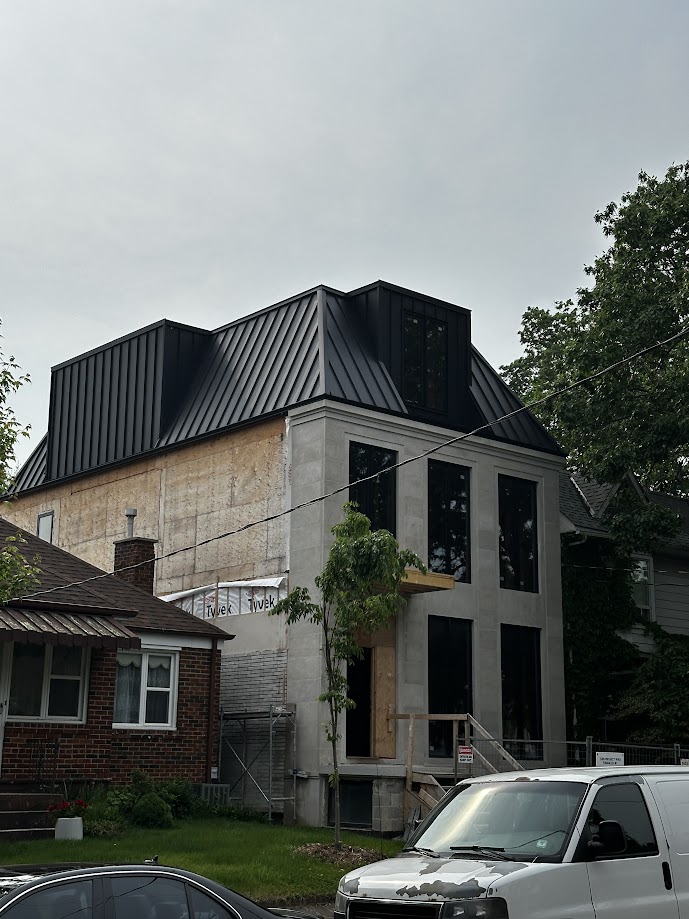
When is a Building Permit required?
Most construction projects require the property owner to apply for and obtain a residential building permit.
A permit is specifically required when you are:
- Constructing a new building or structure larger than 108 square feet (10 square meters).
- Adding an extension or addition to an existing structure.
- Renovating or making changes that affect the building’s compliance with the Ontario Building Code (referred to as Material Alteration).
- Demolishing all or part of a building.
- Installing or modifying mechanical or plumbing systems.
Material Alteration refers to any work that impacts your project’s compliance with building regulations. This includes changes to structural components, mechanical, electrical, or plumbing systems, fire separations, existing fire protection systems, or a change in the building’s use.
How do I get a Residential Building Permit?
Every project is unique, and the residential building permit process depends on the specific scope of your work. However, the general process typically involves five key steps:
-
Confirm Compliance – Ensure your project meets all zoning requirements and applicable laws.
-
Prepare Plans – Either draft your own drawings or hire a qualified designer to create the necessary plans and application documents.
-
Submit Application – Apply for a residential building permit through the City of Toronto.
-
Obtain Permit – Once approved, receive your building permit before starting any construction.
-
Begin Construction & Inspections – Start building and schedule inspections at key stages to ensure compliance with the Ontario Building Code.
How do I make an application?
Filling out a residential building permit application may seem straightforward, but in reality, it often requires additional documentation and approvals to be considered complete.
For example, when applying to build a deck, veranda, or porch, you’ll need to provide detailed construction information, including:
-
Footing details: size, spacing, depth, height above grade, and frost protection measures.
-
Sizes and locations of all columns, along with beam sizes, locations, and spans.
-
Stair construction details: tread height and depth, and headroom clearance above stairs.
-
Guard (railing) construction details: spacing of openings and placement relative to stairs, landings, and platform edges.
You must also submit a site plan showing:
-
Property lines, total lot area, and any rights-of-way or easements (based on a current survey).
-
Locations and dimensions of all existing and proposed buildings, including setback distances from property lines and adjacent structures.
-
A zoning summary showing both permitted and proposed figures, including lot area, gross floor area (GFA), building coverage, and grade elevations to verify building height.
-
Dimensions of parking spaces, driveways, landscaping areas (hard and soft), and any accessory structures such as sheds, decks, or detached garages.
Providing complete and accurate information helps prevent delays in the review and approval process.
2nd Unit / 3 Unit Permit/ MultiPlex/ Laneway/ Garden Suite
Addition/ Extension/ Load Bearing Wall Removal
Garage/ Shed/ Deck/ Porch/ Gazebo/ Cabana
Custom House Design
Site Inspection and Report